Coffee & Conversation: Contract Terms Series (Exclusivity)

Tags

, , , , , ,

Contract Terms Series (IANAL)

There’s a bunch of contract terms for writers that can be difficult to parse for newcomers to the genre, so I want to go over a few in a short, easy contract terms series.

(Note: I am not a lawyer. I am merely speaking from experience on the author side.)

EXCLUSIVITY

When signing contracts, please look to make sure you understand what the exclusivity clause (or in some cases a non-compete clause) states.

Exclusivity is when the publisher has the single/only right to publish words. This means no one else, including YOU, has no right to publish those particular words.

Non-exclusive means the opposite, which is that yes, THIS publisher has the right to publish these words, but if you wanted to sign those same rights to others, you are welcome to do so. Non-exclusive means you can sell the rights over and over.

Normally, contracts will request exclusivity for a specific amount of time when dealing with shorter works (aka, short stories, flash), but throughout the length of the contract in regards to longer works (aka, novels, novellas).

Commonly, you might find that your “really cool short story” cannot be sold or published anywhere else except through “this publisher” for “six months from publication date.” This is a limited exclusivity. It means you’re allowed to sell and/or publish “really cool short story” after six months from the specific day that “this publisher” printed/posted/podcasted it.

Novels will state something more like “this contract will renew every 3/5/10 years. Written notification must be received by the author before the date of renewal in order to end the contract.” [Sometimes it’s even more difficult to get out of contracts. This would be a sort-of kind publisher.] The contract would then go on to dictate how long the publisher would have to remove the publication and send final royalty statements, etc.

Sometimes publishers shove exclusivity within non-compete clauses, which is probably not the best place for it, but some publishers don’t know any better and think non-compete is exclusivity (it isn’t, but I’ll get to that.)

When looking at exclusivity phrasing in your contracts, be sure to inspect 1) whether or not exclusivity exists, 2) how long exclusivity lasts, 3) how to remove exclusivity or if it becomes non-exclusive passively, and 4) how exclusivity interacts with particular first rights or formats, etc.

~Emmi
Canvas Blues – LXXIV: Present

Tags

, , , , , , , , , , ,

CANVAS BLUES
Vignettes Regarding the Artwork of Brendon Kotes

LXXIV: Present

“This is Casey,” Orion mused. He pressed a finger against the raised paint from where a different painting had ripped the wall when Brendon had removed it. “But he’s not normally here. The lines from the frame are the wrong size, don’t match up with what was here originally.”

Brendon shoved his hands deep into his pockets and did his best not to look self-conscious.

“You were trying it.” Orion met his gaze after an unsettling glance across Brendon’s bedroom. “Did it work?”

With a slow shake of his head Brendon turned away.

“He’s young in this painting. Younger than I’d have imagined. You were friends for a long while? Had to be. First relationship. He bail on you? I can’t imagine you wanting to revisit him were it the other way around.”

Brendon cleared his throat, but didn’t say anything.

“You’re like a painting yourself, Brendon.” Orion moved closer, his voice going deeper, smoother. “All facing outward, your emotions like strokes across your skin. Dark, but not shadowy, yet hiding bits of yourself inside all the business of your work.”

Brendon took a step back, needing the space as his world shrank, zeroing in on Casey where he smiled on the wall and Orion’s steady, steely presence. “I wanted it to be real. I wanted to believe you. But it’s not. It didn’t work.”

Orion only nodded and turned back to Casey’s painting. “That is interesting. That had been another theory of mine. If it wasn’t the artist’s intentions, perhaps it’s the viewer’s.” He ran a finger through the air, miming stroking Casey’s cheek. Then he raised an eyebrow at Brendon. “Maybe the artist as viewer is immune.”

Brendon sank onto the edge of his bed, a visceral feeling clutching at his gut. The bed sagged as Orion sat next to him, the mattress too old to remain firm, pressing their thighs together as they dipped toward one another. Orion made no move to pull away. So Brendon didn’t either. Continue reading

Coffee & Conversation: Contract Terms Series (Formats)

Tags

, , , , , , , ,

Contract Terms Series (IANAL)

There’s a bunch of contract terms for writers that can be difficult to parse for newcomers to the genre, so I want to go over a few in a short, easy contract terms series.

(Note: I am not a lawyer. I am merely speaking from experience on the author side.)

FORMATS

When it comes to contracts, generally the more specific the better on the author’s side. Formats is one really good example of this, as often times contracts can make grabs for many formats without the publisher having any intention of using them.

Formats include all the different ways words can be published. Such as: paperback, hardback, audio, eBook, etc. These can be even more specific, for instance: mass market paperback vs trade paperback. And they can be incredibly generalized, for instance: multiple formats or any and all formats.

Most of the time when in contract negotiations, there is a specific type of format that the publisher wants. This could be an electronic format, for example; eEbook publication is generally the cheapest method of publication, taking the least out of a publishers finances. However, in case of a book doing particularly well, the publisher might want an option clause of some sort that claims other formats. For instance, they might request paperback rights for a particular period of time after they exercise their eBook format right in order to take advantage of a well-selling book.

Sometimes publisher contracts will request a dual format, with online and audio. This is often in the case of free online magazines.

Sometimes publisher contracts will request online rights with a limited time option for audio. Sometimes the publisher contracts could request eBook/electronic format, with an option to include the words/story in an end-of-year or best-of collection.

Please be careful signing anything that doesn’t give you any sort of compensation for extra formats if the option for them to be published in those formats is in the contract.

Also please be careful signing anything that vaguely gives away “multiple formats” in the contract. Seriously, who knows what they mean by that. And if the place specifies “first rights” in those “multiple formats” it can tie your hands up a lot in regards to future ways to sell the words. Even if the contract merely is reprint/non-exclusive rights for those “multiple formats,” this can cause problems for you if you try to sell first rights of a particular format elsewhere only to have the previous publisher decide they want to do it first. They have the right to do that because you signed that right to them (probably without compensation), and you will end up in breach of contract with the second publication.

So try to get your contracts to 1) be specific in what kind of formats they plan on publishing, and 2) explain the situation when extra formats will be published, and 3) document what your compensation will be if the option to publish in those extra formats are exercised.

~Emmi

Canvas Blues – LXXIII: Yesteryears

Tags

, , , , , , , , , , ,

CANVAS BLUES
Vignettes Regarding the Artwork of Brendon Kotes

LXXIII: Yesteryears

Funny thing about floating about in the middle, no one ever thinks of you like that. It’s either one side or the other. The if-you’re-not-with-me-you’re-against-me mentality. Active imaginations thinking gossip, gossip, gossip, about the person not around. Over-sensitivity, youthfulness, anxieties all working to destroy what rationalism some might have possessed otherwise.

Brendon tried, he truly did, desperate to continue clinging to the two friends he’d raced down Grant’s Lorry Road with in the summer, the two friends he’d met in an old car cemetery time after time to play hide and seek among the rusted fenders and rotted rubber and butterfly gatherings.

Sure Casey got the bulk of his time, the most of his focus, his teenaged mind lost to hormones and new sensations. Robbie got his own time though, the two of them sitting at Robbie’s expansive dining room table, sketches and outlines spread across two thirds of the space. They worked on two comics concurrently.

The first one was to be a serialized fantasy about a spiderling who controlled the minds of a typical dungeon-crawling party. Each comic somewhat separate with occasional short arcs deep within specific dungeons or inside particular taverns, but generally individual in nature ala Sunday morning funnies.

The second one took far more of Brendon’s artistic chops, for the humorous alterations in character and setting just would not do, the space stations and exoplanets and marauders needing to have a realistic flare within their design. Robbie set the stage, his countless notes on plot arcs and character traits exposing a sweet naivety in their creation, but filled with so much passion, so much love, that the flaws disappeared.

They’d completed almost fifty individual panes of the fantasy comic—It’s All Under Control—and a measly, but gorgeous, fourteen panes of the grimdark sci-fi—Stars Avast—when Casey found out. Continue reading

Coffee & Conversation: Contract Terms Series (First Rights)

Tags

, , , , , , ,

Contract Terms Series (IANAL)

There’s a bunch of contract terms for writers that can be difficult to parse for newcomers to the genre, so I want to go over a few in a short, easy contract terms series.

(Note: I am not a lawyer. I am merely speaking from experience on the author side.)

FIRST RIGHTS

First rights are essentially the right to first publication. This means that the words being licensed have never been published before in the specific way they are being sold. In other words: The words are not being reprinted. They are original.

There are many kinds of first rights, which is why it’s important to know and understand them. First rights also tend to be worth more than reprint rights, which is another reason they matter so much.

For instance: You can have first audio rights, which are different from first paperback rights. You can have first English rights, which is different than first Spanish rights. You can have first anthology rights, first eBook rights, first audio, etc.

Any contract that attempts to claim ALL first rights, particularly without actually having any intention of using all those first rights, should be contested and requested to have a rewording.

By allowing a particular contract access to all first rights without them having clauses giving those rights back to you, you can end up with a story that can never be published in certain formats. Which is not cool.

~Emmi

Canvas Blues – LXXII: Yesteryears

Tags

, , , , , , , , , , ,

CANVAS BLUES
Vignettes Regarding the Artwork of Brendon Kotes

LXXII: Yesteryears

Junior year boasted one of those moments that would forever be commemorated in a 5k walk/run title, but it started innocently enough with a local news reporter who fancied himself a hot shot journalist. The man—Tony Kepuchar—did a spotlight piece on cop favoritism. Election year and all that, with the sheriff being incumbent and his friends and family like an ant network spread about the county. Kepuchar did his research, no one could fault him for that, and yet, one little line and the word “allegation” was enough to set off a chain of events that would forever haunt Brendon’s neighborhood.

“Taylor Lee Barry, grandson to County Sheriff Joseph Barry, is one such example, having been implicated in illegal street races, but never charged, with an allegation against him of heroin dealing that has, interestingly, not been investigated.”

Casey’s father threw that paper across the living room, smacking a row of DVDs to the ground in a haphazard cascade of porn and 90s flicks. Then he went on a rampage, the alcohol singing in his veins. He found Casey in the garage, fiddling with replacing the Mustang’s water pump, and proceeded to beat him with the first thing that came to hand—the rubber serpentine belt Casey had removed and not yet returned.

“No good druggie! I knew that man was bad news!”

Though the hits remained weak, they came fast and no amount of confused questions, and then later, insistences that Casey had never participated, would assuage his father’s self-righteous fury.

Casey showed up on Brendon’s doorstep on foot, bruises starting to show across his neck and shoulders, but he paid them no heed, instead ranting and raging as loud and crass as his father had the hour earlier before finally calling his mother and—partially in demand and partially begging—asked to move in with her and Becks.

“It’s not like we’re doing anything together. The Mustang’s been done and in my name, not his and I can drive the extra fifteen minutes to school in the morning, no biggie.”

Brendon listened with a palm against Casey’s back and cheek to Casey’s shoulder, gently though, afraid of hurting him further.

“I don’t care if it’s a closet, Mom. Could be a fucking couch for all I care.” Then a muttered, “Sorry.” Probably on account of the cussing. Continue reading

Coffee & Conversation: What do writers sell?

Tags

, , , , , , , , , ,

What do writers sell?

Writers sell licenses. That’s it. Or at least that should be it.

Writers OWN copyright. But writers should not be SELLING copyright. Copyright is ownership. It’s the “these words are mine and no, you can’t use them without my permission” bit.

So when writers sign contracts, they aren’t signing away copyright; they’re signing away the license, or right, to use, disseminate, print, or publish those words. The words themselves remain belonging to the writer.

There are a few places (actually, there are many more than a few places, unfortunately) that have awful contracts where the author actually does sign away copyright, giving all the words they’d written to a company. There are even places that demand ownership of your publishing name, disallowing a writer to publish under that particular name anywhere but with that company. [Please don’t sign these.]

The only time you should, as a writer, be selling copyright, is when you are ghostwriting (because during ghostwriting you’re paid a lump sum to writer someone else’s story for them, so they get the copyright of it) or during some form of shared-world ownership situation. (Think DnD, DragonLance, Forgotten Realms, TV show tie-ins, though even then, very often, the copyright remains with the author and they simply have incredibly strict contracts on what they’re allowed to write).

So please check your contracts over carefully! Make sure you’re not giving away something you shouldn’t be, particularly in smaller press or magazines where the publishers might not be fully aware of what they’re asking for.

~Emmi

Canvas Blues – LXXI: Present

Tags

, , , , , , , , , ,

CANVAS BLUES
Vignettes Regarding the Artwork of Brendon Kotes

LXXI: Present

Tell me about this Casey. As if Casey could be expressed in simple words.

Brendon poured them both another round of the old whiskey. Too much probably, but Evelyn Yert remained on the mind. Again, too much so. He swallowed, gaze darting about the room, catching on his sketches, wondered whether he should tear them all down, start fresh, blank walls, clean slate.

“Brendon?” Orion’s voice so soft, a gentle, coaxing sound from a man who could be so hard and unyielding.

“You have a high school love? Not a crush or a fling, but an actual love affair.”

Orion studied Brendon closely. “The kind where you find yourself crying in the shower and pretend it’s just the water?”

Brendon opened his hands in an approximation of a shrug. For him it hadn’t been the shower; it’d been his easel over at Llama Park, just out of sight of the lakeside hiking trail, where a little gurgling brook that fed into the lake happily ignored the angry paint smears and harsh words.

“It’s like you fall in love with a person one day and wake up the next to discover that that person never actually existed at all.”

Orion nodded slowly. “Heartbreak hits even the coldest of us.”

“Right. I’m not saying I’m somehow different.” Brendon stood abruptly, paced the small living room, knowing that Orion stared but unable to stop himself from moving, needing the action, the fingers not holding his glass twitching with the desire to hold a paintbrush. “Things just look different when you’re younger.”

“Emotions are heightened,” began Orion.

“No, not that. Well, yes, you’re right, but that’s not what I’m referring to.” It’s all about perspective. “You see people one way when seeing things through a child’s eyes.”

“And then you grow up to realize your parents’ flaws or grow away from friends.”

“He was…”

Orion remained quiet, unmoving in the armchair that backed against the far wall. Along the wall beyond his head there were sketches of crabs, of cattails, of many, many lined boat drawings because Brendon had been practicing ripples, ripples and more ripples. Continue reading

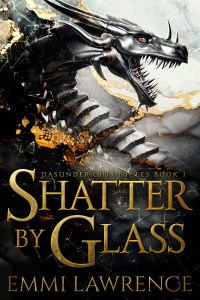
Shatter by Glass Republished :)

Tags

, , , , , , , , , , ,

I’m pleased to announce that I have finally gotten my act together and republished the first in my original Loose Id novels. Murder in Color will follow in 2022.

The DaSunder Chronicles are murder mysteries featuring different characters in each book. Each can be read as a standalone in terms of the murder mystery, though they are written in chronological order.

This was my very first novel published, so it’s got a special place in my heart for kicking me on the path I’m on.


SHATTER BY GLASS

DaSunder Chronicles #1

Where dragons fly on wings of sand…

When Detective Brettoni Rhodes is called to a murder scene outside the desert city of DaSunder, he doesn’t expect the victim to be one of two sand conjurers who had fled years ago after an accident they’d caused. His past doesn’t stop there, for Luca Baino, the second man who had fled DaSunder and Brett’s old flame, suddenly appears looking to rekindle their relationship.

But all evidence in this investigation steadily points to another conjurer, one who can turn sand into glass. And the suspect pool with that capability is light, with Luca at the very top.

Every step of the way, Brett finds more and more reason to suspect Luca of murdering his own friend, his rekindled interest in Brett mere manipulation. With conjured creatures attacking DaSunder and the governor demanding a quick, brutal end to the bloodshed and chaos, there is little time to discover the truth. For the harsh laws of DaSunder hang low and ominous over the investigation, demanding retribution, and no one, including Brett, wants to be caught in that trap.

As the body count rises and the evidence mounts, Brett isn’t sure he can save Luca from the executioner’s axe. Or whether he should even try.


Thank you to everyone who has read any of my stories, whether my free short stories here on my blog or my longer novels. I appreciate every single read. Every single person.

The beautiful things people say about my writing, how much they enjoy my fantasy worlds, how much they like my characters, they keep me going and keep me writing.

This is my passion project, which I’m sure shows, and I’m so thankful for the kindness I’ve been shown on everything I write.

<3 Emmi

Coffee & Conversation: Removing large-scale defaults in my work

Tags

, , , , , , , , , ,

Removing large-scale defaults in my work

I feel like who I am as a writer is always in flux. Which I think is a really good thing and I hope I always keep pushing myself. These are just a few ways that aspects of my writing have moved beyond a norm I’d instinctively set for myself.

Perspective

There was a time when every story I wrote was in third person perspective. Everything. I didn’t even consider writing in first person because I didn’t tend to like first person stories as much. You can get pretty close to a character even in third person, so I never thought much about it. There was even an interview I read by another author who said she only wrote in first person because she didn’t think she could get as close in third and I thought…”how silly” and “I would hate to only write in first.”

Slowly, I’ve gone beyond third person. I’ve written plenty of stories in first and even in second person (though I’m still iffy on doing whole novels in second because you need to have a really good reason for it). When I sit down to write a new story, I’m far more likely to truly consider perspective and decide which one will be best for the story I want to tell rather than default to the one I use the most often.

Setting

I also used to only write secondary world/high fantasy or distant science-fiction. I still default to distant time science-fiction if I write sci-fi because near future seems synonymous with hard science-fiction to a lot of people and I’m much more of a “hey, wouldn’t it be cool if…” and “who cares if it’s impossible” type of writer. Continue reading